Transformative change and Innovations for Diverse beach Ecosystems and sustainable Livelihoods through Enhanced wrack maNagEment Strategies
Project goal
To effect transformative change in wrack management globally. Our goal is to reduce conflict, improve transparency in beach management, and help managers align practices with biodiversity and climate goals while sustaining coastal tourism, economic, and community benefits.
Motivation for the project
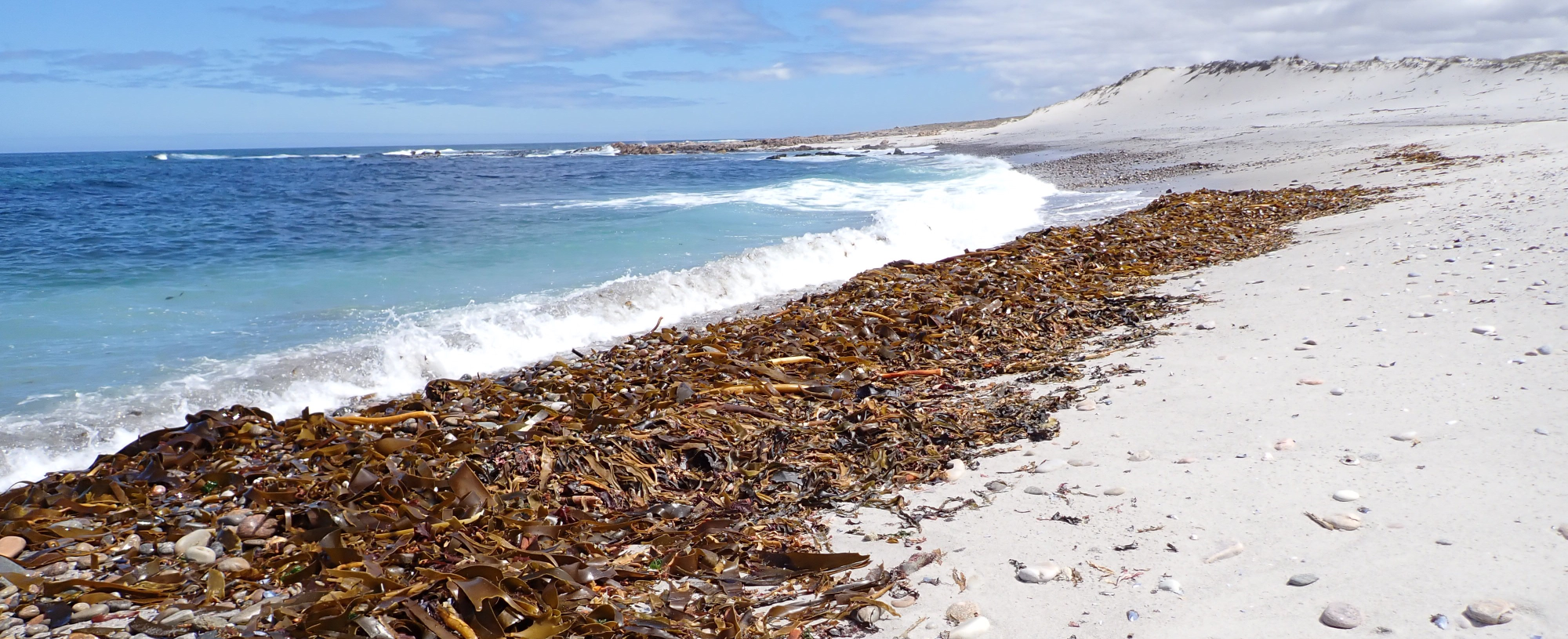
A significant, yet often overlooked, threat to beach biodiversity is the widespread practice removing wrack (washed-up kelp, seaweed, and seagrass) from beaches. Beach grooming is intended to improve the aesthetic quality of recreational beaches because of the social perception is that beaches should be ‘clean’. Wrack harvesting is removal of wrack for commercial purposes, such as making agar or providing feed in aquaculture.
These practices of removing wrack from beaches impact the natural system:
they remove food and habitat for invertebrate animals that depend on wrack, thereby impacting the survival of larger species such as seabirds
they reduce sand accumulation and dune formation, impacting the ecosystem service of coastal protection from large waves and storm
On the other hand, human activities can also cause excessive wrack accumulation through nutrient enrichment from agriculture and urban runoff. In such cases, beach cleaning may be necessary to reduce eutrophication impacts and can even enhance biodiversity.
A more nuanced understanding of these socio-ecological dynamics is therefore needed to support informed decisions about when beach cleaning is beneficial and when it is harmful to balance ecological, social and economic imperatives.
Objectives
The project is divided into six work packages that collectively:
Understand how perceptions, cultural norms and governance frameworks shape wrack-related decisions.
Identify which components of beach biodiversity depend on wrack, and how different wrack management regimes affect them.
Assess key ecosystem services linked to wrack (e.g., habitat support, coastal protection, nutrient and carbon cycling) and quantify trade-offs under alternative management options.
Co-develop and test practical interventions that can reconcile biodiversity outcomes with tourism and community needs, and deliver a Best Practice Guide and policy briefs for implementation.
Funding
TIDELINES is a Biodiversa+ project in the BiodivTransform programme, undertaken in seven partner countries: South Africa, Netherlands, Germany, Denmark, Spain, Italy, and Brazil. In South Africa it is funded by the National Research Foundation.